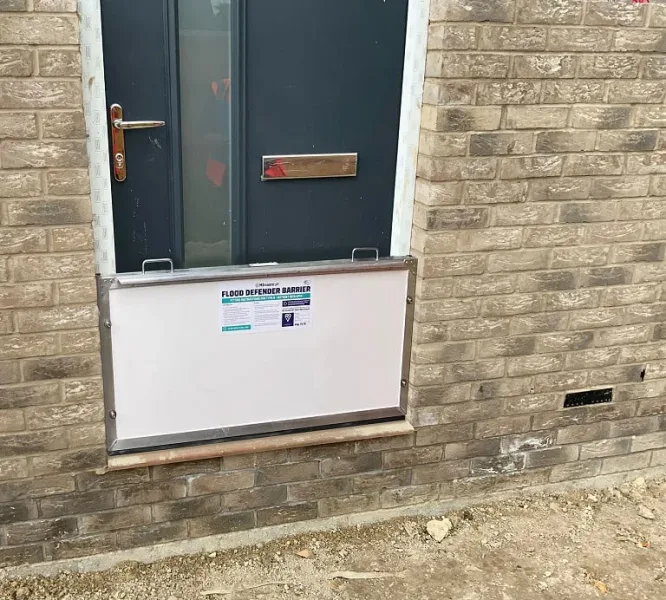
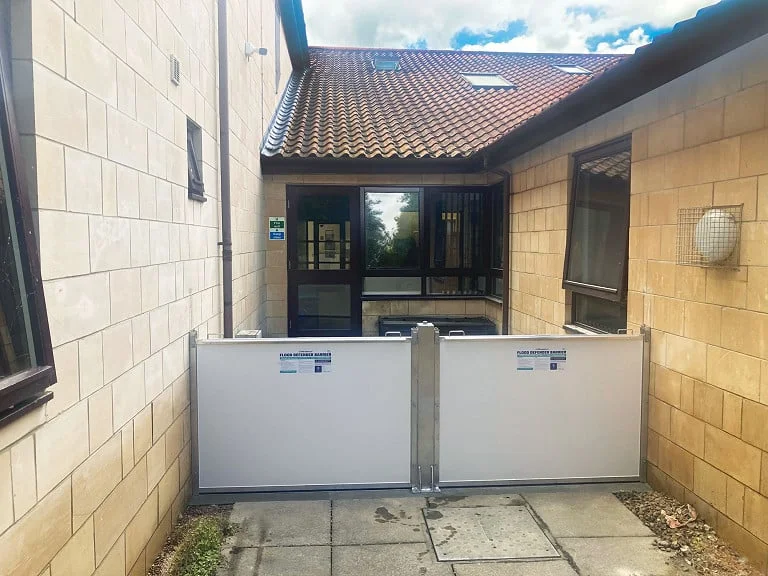
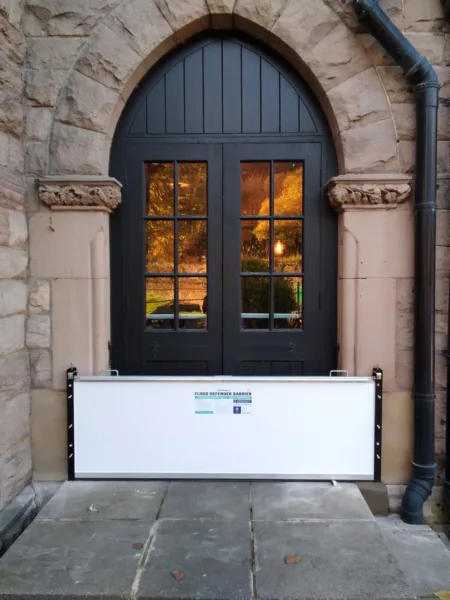
- Ensure floor, back seals and bottom seal are clean and free from obstructions.
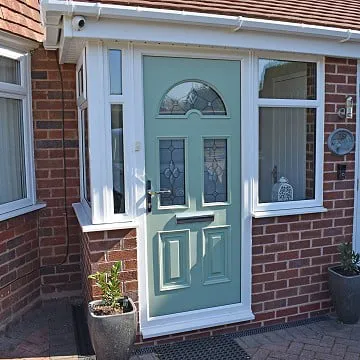
- Centralise panel to aperture, ensuring vertical seal is facing aperture and thick horizontal seal is on the bottom. If your barrier has side rails ensure the panel sits centrally between these.
- Apply gentle downward pressure to top of barrier in order to align bolt holes to both sides of barrier.
- Using T grip handle as supplied tighten the bolts sufficiently so that no gap is visible between door-frame and barrier seal.
- IMPORTANT: TAKE CARE NOT TO OVER TIGHTEN. OVER TIGHTENING WILL CAUSE THE BOLTS TO TWIST.
Barrier Fixing Options
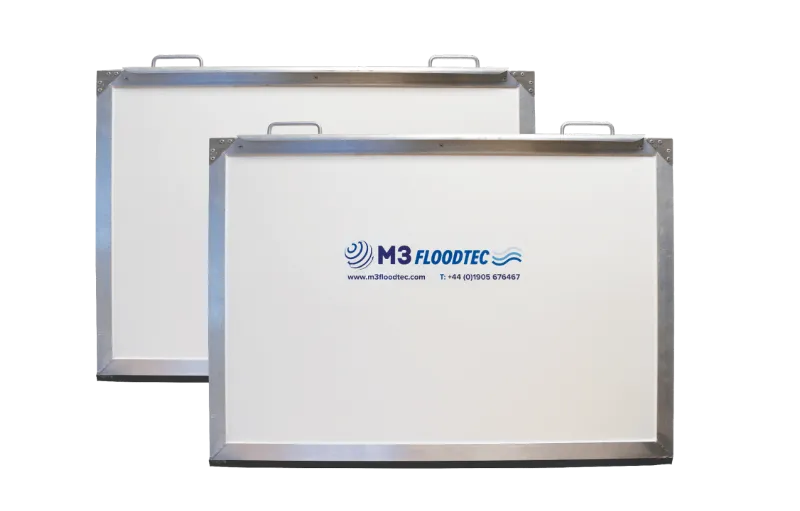
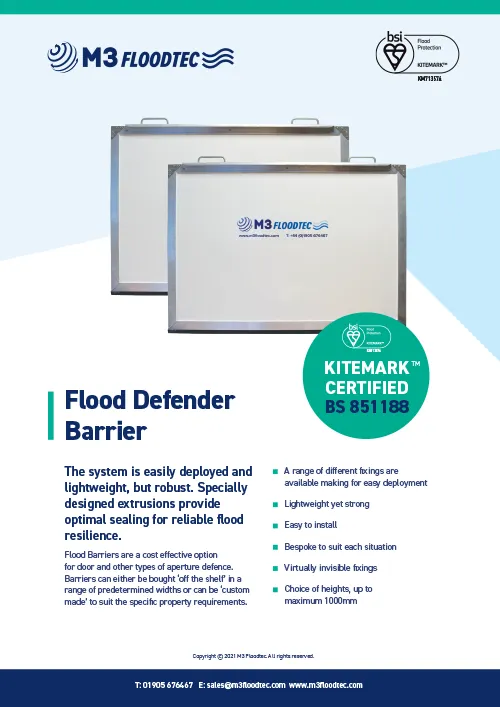
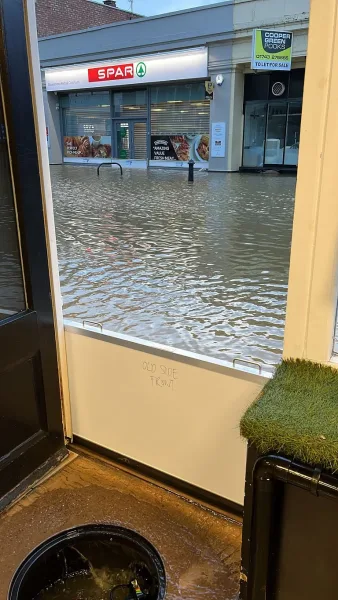
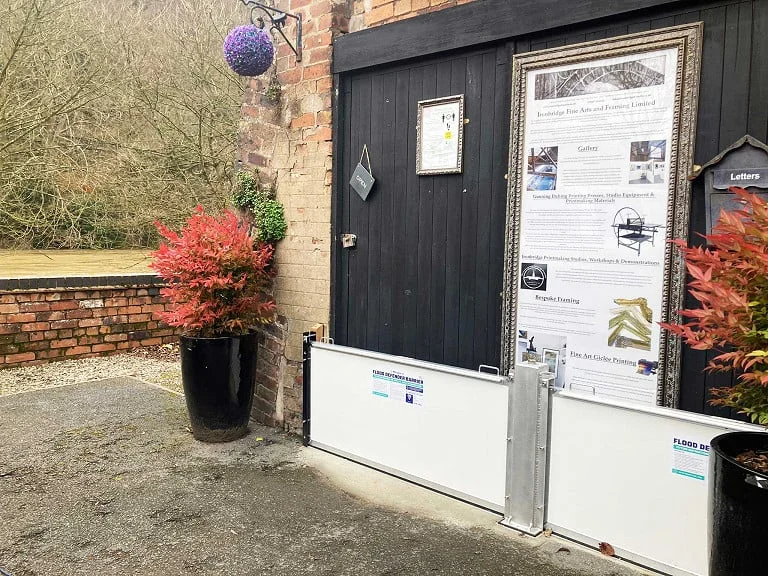
Flood Barriers are a cost effective option for door and other types of aperture defence. Barriers can either be bought ‘off the shelf’ in a range of predetermined widths or can be ‘custom made’ to suit the specific property requirements. There are seven fixing systems for the M3 Floodtec Defender Barrier:
A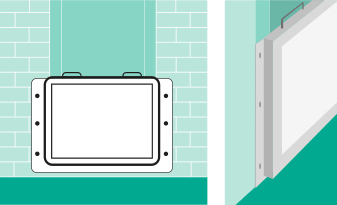
Wall Mounted Barrier
This barrier fixing system is used where there is a protruding step or external hinge. It is most commonly used for patio doors.
The barrier has side and bottom plates welded onto the barrier and are about 65mm in depth and 50mm width from the actual barrier itself.
D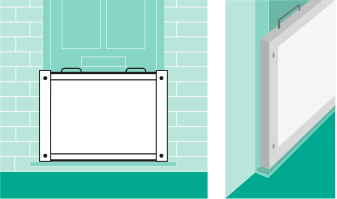
Barrier Into Vertical Rail
Where there is no frame exposed, the barrier can be secured using permanently located vertical side rails. These can be situated either in the reveal of the doorway, or as face fix (front of brickwork).
Side rails can be powder coated to match the exterior. The barrier then simply slots into the rails and is fixed in place using M8 Socket Head Cap Screws.
E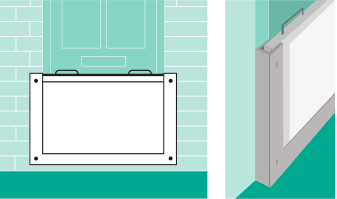
Barrier Into U-Shape Frame
This fixing system can be used in situations where there is no step, or where aesthetics are not an issue. Can be face fix or reveal fix and measured accordingly.
A U-shaped frame is fixed permanently on the brickwork either side of the aperture. Side rails can be powder coated to match the exterior. The barrier then simply slots into the rails and is fixed in place using M8 Socket Head Cap Screws.
F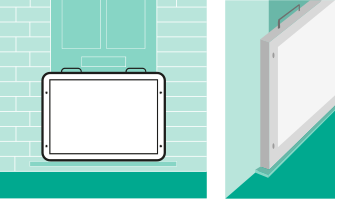
Direct Fixing Into Brick
Direct Fixing into Brick (direct into the wall). Being discrete and virtually invisible, this is the preferred fixing option, suitable for relatively flush brickwork or render.
The nutserts are inserted into the wall (note: not the mortar joint) by drilling a 10mm hole, and the nutserts remain in situ permanently. The barrier is then simply fixed to these inserts using M8 Socket Head Cap Screws.
G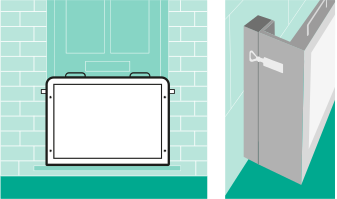
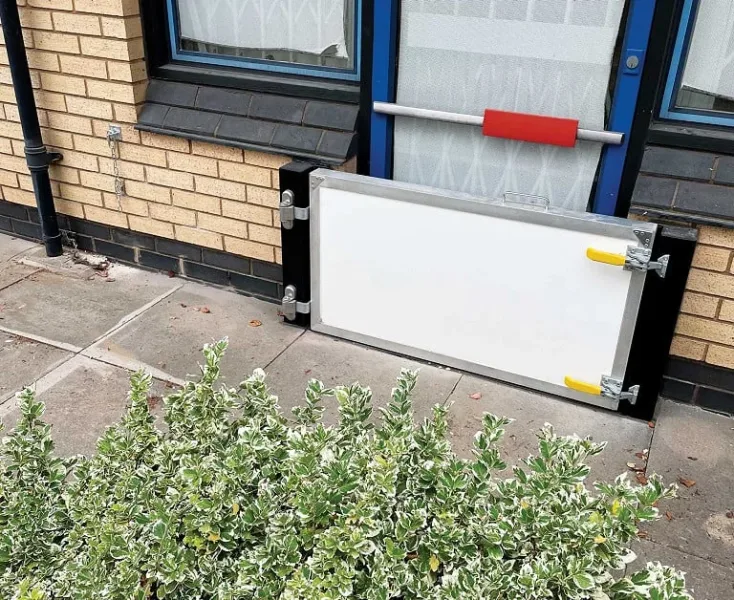
Clip-On Barrier
The Clip-On Barrier is designed to be ‘clipped’ into position on a wall mounted aluminium frame without the use of tools or separate fixings making easy and quick to deploy.
To deploy, ‘lugs’ welded to the bottom of the Barrier are positioned in receiving brackets on the bottom of the wall mounted frame. Each side of the Barrier features a ‘flip over’ clip device. To secure the Barrier in position, these are clipped over the holding bracket on the wall mounted frame & closed.